Real-Time News Sentiment
Analysis of trending Reddit news — tracking public mood,
controversy, and key topics
1358 Stories Analyzed
80 Positive Sentiment
1167 Negative Sentiment

r/news
Public Sentiment
The general sentiment surrounding the news is one of deep skepticism and amusement, with readers largely dismissing the official explanation as a transparent cover-up for simple incompetence. Many interpret the discovery of the trophy in the team's own basement as a classic case of misplaced items rather than a sophisticated theft, mocking the club's narrative that suspects hid the item to retrieve it later. The prevailing view is that the organization is too embarrassed to admit they lost the trophy themselves, leading to a convoluted story that fails to convince anyone familiar with basic logic. Readers are quick to ridicule the situation, comparing the scenario to a mother asking if the basement was checked and suggesting the club's response is nothing more than a nervous laugh in the face of scrutiny. The consensus leans heavily toward the idea that this was an inside job or a clumsy administrative error, with the "master thieves" theory being widely regarded as absurd. Ultimately, the public reaction is characterized by derision, viewing the entire incident as a farce where the club is trying to save face after a foolish mistake.
r/news
Public Sentiment
The overwhelming sentiment among readers is one of relief and satisfaction that the fugitive, a child sex offender and police killer, has been neutralized, with many explicitly stating they do not mourn his death. There is a strong consensus that his demise spares the public the cost of a trial and prevents him from achieving martyrdom, while several comments express hope that those who aided his long evasion will also face accountability. The tone is largely devoid of sympathy for Freeman, with users mocking any potential criticism of the police action and emphasizing that his choice to engage in an armed standoff rather than surrender justified the lethal outcome. However, a distinct undercurrent of criticism targets the media's role in amplifying Freeman's controversial views during the pandemic, suggesting that news outlets prioritized controversy and shareholder value over public safety, which may have contributed to his radicalization. While some readers dismiss concerns about police violence as "brain dead takes" lacking nuance, others use the event to highlight the tragedy of the two officers killed and the trauma inflicted on families, contrasting the grim reality with the perceived self-satisfaction of those who critique the situation without understanding the context. Ultimately, the discourse reflects a hardened public stance against violent criminals, tempered by a cynical view of how media sensationalism can exacerbate such dangers.
Public Sentiment
The prevailing sentiment is one of deep dread and cynicism regarding an inevitable, escalating regional war that could spiral into a global conflict. Readers express a strong belief that the current administration is recklessly provoking Iran through military aggression and diplomatic blunders, driven by a desire for dominance rather than strategic necessity. There is widespread anger over the perceived sacrifice of young soldiers, who are viewed as being sent into a "meat grinder" to serve the interests of political leaders and corporate elites, with many feeling that the military-industrial complex and media narratives are manipulating the public to accept this violence as unavoidable. Underlying the fear of war is a profound frustration with the nation's continued reliance on fossil fuels and the missed opportunity to transition to renewable energy, which many argue would have eliminated the geopolitical leverage of Middle Eastern regimes. Commenters criticize the government for prioritizing oil profits and the petrodollar over sustainable development, viewing the conflict as a direct consequence of this short-sightedness. The overall mood is one of hopelessness, with users feeling that society is being led toward a dystopian future where economic instability, environmental degradation, and endless warfare are the only outcomes of a system that values profit and power over human life and long-term survival.
Public Sentiment
The prevailing sentiment among readers is one of deep cynicism and outrage regarding the US administration's handling of the crisis, with many viewing the reported peace talks as a deceptive stall tactic masking inevitable military escalation. A significant portion of the commentary expresses a belief that a ground invasion is not only planned but already underway, driven by a leadership described as incompetent, morally bankrupt, and motivated by war profiteering rather than national security. Critics argue that the military is being led by "morons" or "psychopaths" who have betrayed constitutional oaths and international law, while others debate the legality of orders and the failure of Congress to check executive overreach, creating a pervasive sense of national shame and fear of a disastrous quagmire. Simultaneously, there is intense skepticism about Pakistan's role as a mediator, with many dismissing the country as an unreliable actor due to its own regional conflicts with Afghanistan and India, its history of harboring terrorists, and its complex geopolitical entanglements. The discussion frequently shifts to the broader regional fallout, where Iran is seen as strategically outmaneuvering the US by targeting civilian infrastructure to force a political end to the war, while Gulf states are viewed as trapped between US pressure and Iranian aggression. Ultimately, the tone is dominated by a grim expectation that the situation will spiral into a wider, economically devastating war where no party acts in good faith, leaving civilians and regional stability as the primary casualties.
Public Sentiment
The prevailing sentiment among readers is one of deep cynicism and outrage, viewing the decision to allow Russian oil to reach Cuba not as a humanitarian gesture, but as clear evidence of a US foreign policy driven by corruption, Russian influence, and the personal interests of the Trump administration. Many commenters express frustration over the suffering of the Cuban people, citing blackouts and medical crises, while simultaneously condemning the US for its role in exacerbating these conditions through sanctions. A dominant theme is the belief that the administration is acting as an agent for Russia, with numerous users citing the Mueller Report, alleged financial ties, and obstruction of justice as proof that Trump's actions are designed to benefit Putin and undermine American sovereignty, rather than serving any logical national interest. Beyond the geopolitical analysis, there is a pervasive sense of despair regarding the political polarization and the perceived inability of the American public to recognize these alleged betrayals. Commenters frequently express exhaustion with the "MAGA" movement's dismissal of evidence, comparing the current political climate to the fall of an empire and predicting that future generations will view Trump's presidency and its symbols with the same revulsion as Nazi memorabilia. The discussion is further fueled by speculation about compromising material, such as the Epstein files, and a belief that the administration's erratic decisions are the result of blackmail or a deliberate strategy to destroy the US from within, leaving many feeling that the government has become indistinguishable from a criminal organization serving foreign handlers.

r/news
Public Sentiment
The general sentiment among readers is a mix of skepticism regarding official narratives and strong pro-Ukrainian, anti-Russian bias. While some users express a desire for the incident to be something extraordinary like an alien encounter, the majority quickly dismiss this in favor of geopolitical explanations, with many accusing Russia of orchestrating false flag operations or blaming Russian drones for the crashes. There is a palpable frustration directed at perceived Russian propaganda, leading to heated exchanges where users aggressively defend NATO's stance and accuse dissenting voices of being bots or disinformation agents. The discussion is heavily dominated by a desire for NATO to take a more aggressive stance against Russia, with several comments explicitly hoping for a direct conflict that would allow the alliance to "crush" the Russian military. Participants frequently cite statistics on airspace violations across various NATO countries to support the view that Russia is an escalating threat, while simultaneously rejecting any notion that Ukraine is the aggressor. The overall tone is confrontational and polarized, characterized by personal attacks, sarcasm, and a unified consensus that the incident is part of a broader Russian provocation that NATO must firmly counter.
Public Sentiment
The general sentiment is deeply polarized, with a significant portion of the comments immediately politicizing the Pope's statement by linking it to current US and Israeli leaders, particularly Donald Trump and Benjamin Netanyahu. While some users mock the idea of Trump's piety or criticize the hypocrisy of religious institutions citing historical atrocities like the Crusades, others defend the Pope's theological stance, arguing that past church errors do not invalidate current moral condemnations. There is a strong undercurrent of skepticism regarding the Bible's consistency with the Pope's message, alongside a recurring call for the separation of church and state. Beyond the political debate, a distinct atheistic and secular perspective emerges, dismissing the entire religious framework as a "scam" and arguing that morality should exist independently of divine command. These voices suggest that the Pope's authority is irrelevant to non-believers and that the concept of God rejecting prayers is a fabrication. Ultimately, the discussion reflects a clash between those who view the Pope's words as a timely moral intervention, those who see them as hypocritical given historical context, and those who reject the religious premise entirely in favor of secular ethics.

r/news
Public Sentiment
The general sentiment is deeply skeptical and critical, with many readers dismissing the diplomatic visit as a sign of desperation or labeling the Ukrainian leadership as a "puppet" and "grifter." There is a strong undercurrent of cynicism regarding Western involvement, with opinions suggesting that the US made its biggest mistake by starting the conflict and failing to effectively counter drone warfare, while simultaneously diverting European-funded weapons to Israel. Some commenters question the necessity of the tour, implying that the situation has deteriorated significantly if such high-level security appeals are required. Conversely, a significant portion of the discussion focuses on the strategic implications of drone warfare, debating whether Iran's decision to supply Russia was a blunder or a calculated move. While some argue that Iranian drones forced the rapid development of superior, low-cost countermeasures by Ukraine and its allies, others contend that this merely expanded Russia's industrial base and provided Iran with valuable intelligence and supply chains. The conversation reveals a complex mix of geopolitical frustration, technical analysis regarding the arms race in autonomous weapons, and a pervasive distrust of the motivations behind both the US and Ukrainian actions.
r/news
Public Sentiment
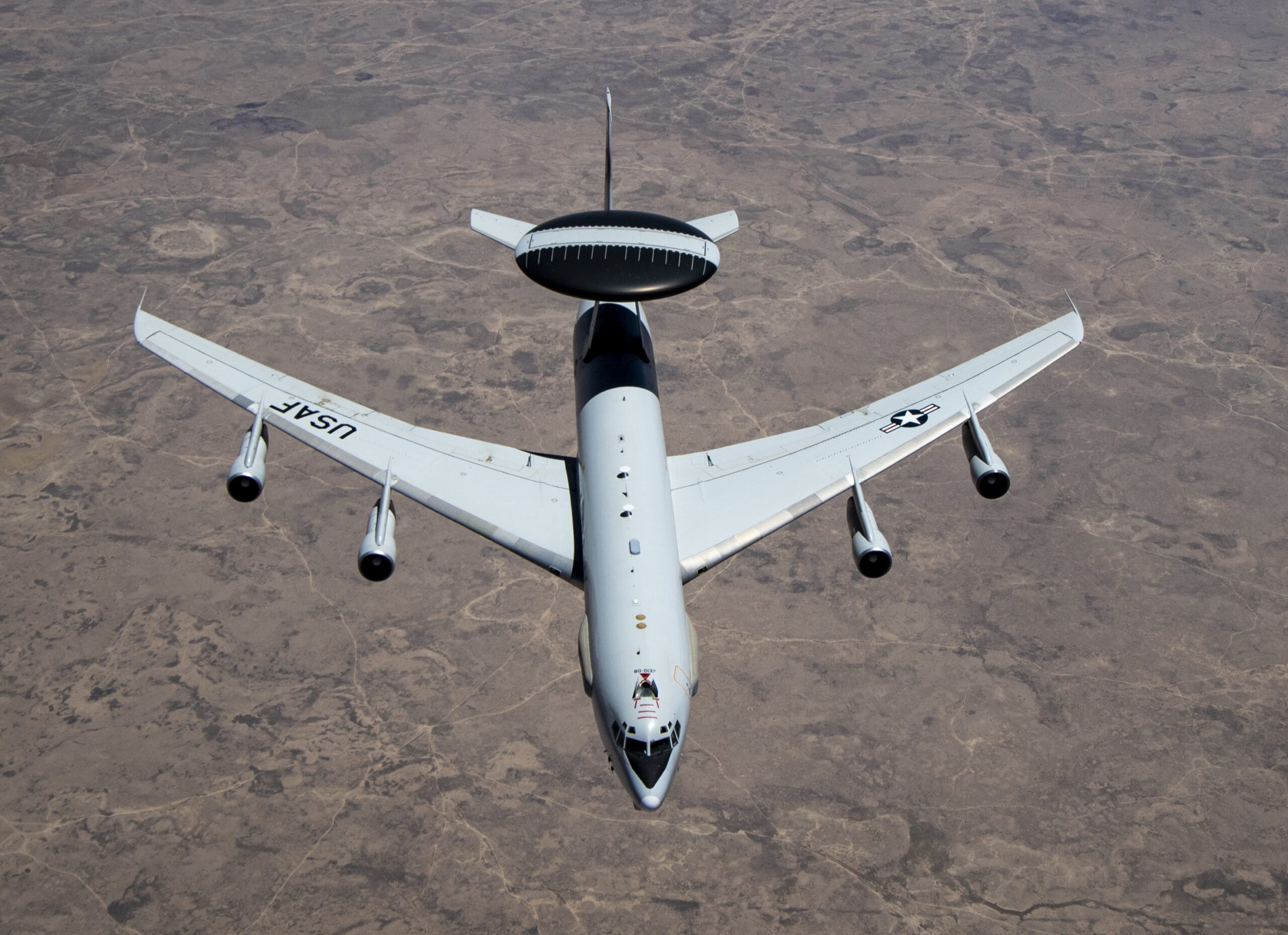
The prevailing sentiment among readers is one of intense skepticism and anger regarding the official narrative that the E-3 AWACS aircraft was merely "damaged," with many insisting the plane was completely destroyed, split in half, and beyond repair. This frustration extends to a deep distrust of the current administration and media outlets, which are accused of downplaying the severity of the loss to hide military incompetence and strategic failures. Commenters frequently draw parallels to other alleged deceptions, such as the "laundry room fire" on the USS Gerald Ford and the denial of civilian casualties in Minab, suggesting a systematic pattern of lying to the public to protect the administration's image and obscure the reality of a deteriorating war effort. Beyond the specific incident, there is a strong undercurrent of outrage over the $600 million cost of the aircraft, with many contrasting this expenditure against cuts to domestic programs like healthcare and cancer research. The discussion highlights a belief that the military-industrial complex is prioritizing profit over national security, while the public is being kept in the dark through the suppression of OSINT data and commercial satellite imagery. Ultimately, the opinions reflect a feeling that the U.S. is losing the conflict due to arrogance, poor leadership, and a deliberate effort to manufacture consent by controlling the flow of information, leaving citizens feeling betrayed and uninformed about the true state of the war.
r/news
Public Sentiment
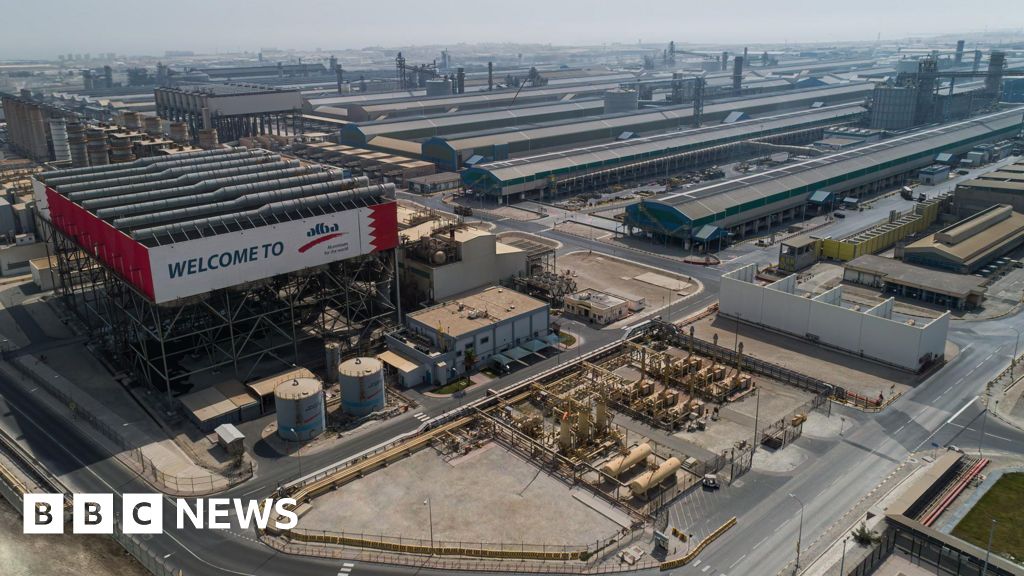
The prevailing sentiment among readers is one of deep cynicism regarding the conflict's escalation, with many viewing the attacks on Gulf industrial sites as a calculated, strategic response by Iran rather than indiscriminate chaos. A significant portion of the commentary argues that Iran is employing a "mosaic warfare" strategy designed to inflict maximum economic pain on the US and its allies, specifically targeting infrastructure to deter a potential ground invasion and make the war too costly to sustain. While some express concern that these actions are alienating Gulf neighbors and could lead to a prolonged, devastating war that outlives the current generation, others believe Iran is simply defending its sovereignty against an imperialist agenda, noting that the US and Israel have already committed war crimes by striking civilian facilities. Underlying the strategic analysis is a strong distrust of Western media and government narratives, with many users accusing US news outlets of being compromised propaganda machines that fail to report the reality of the situation. There is a palpable frustration with the perceived hypocrisy of the US and its allies, who are criticized for ignoring the rules of war while condemning Iran's retaliation. The discourse is sharply divided between those who see the conflict as a foolish, avoidable disaster driven by political incompetence and those who view it as an inevitable clash where the weaker power must use asymmetric tactics to survive, ultimately concluding that the global economy and regional stability are being sacrificed for a war of greed and pride.
Public Sentiment
The general sentiment reflects a mix of skepticism regarding the talks' efficacy and cynicism about the geopolitical motives driving them. Many observers question the utility of negotiations that exclude the primary belligerents—the US, Iran, and Israel—viewing the event as potentially performative or a strategic maneuver by regional allies to present a unified front to Washington. While some credit Pakistan with skilled diplomacy for navigating its delicate position between Saudi and Iranian interests, others dismiss the country's leverage, suggesting ulterior motives like securing US funding or attempting to salvage the petrodollar system. A significant portion of the discourse is dominated by frustration with US leadership, with comments blaming the White House for the escalation and doubting any deal can succeed under the current administration. Underlying the geopolitical analysis is a deep anxiety about the potential for regional catastrophe, with fears that the conflict could spiral into a wider war involving mass fighter mobilization and the closure of the Strait of Hormuz. Opinions are sharply divided on the military balance of power; some argue Iran holds significant leverage through control of the strait, while others insist on US and Israeli air superiority rendering Iranian threats hollow. The conversation frequently devolves into personal attacks on political figures and debates over the credibility of various nations, yet a recurring theme is the recognition that the global economy, particularly vulnerable nations, is already suffering from the disruption of oil flows. Ultimately, the mood is one of apprehension, where the hope for a diplomatic solution is weighed heavily against the belief that the situation is spiraling out of control due to a lack of genuine "grown-up" leadership.

r/news
Public Sentiment
The prevailing sentiment is one of deep skepticism and fear that Walmart's rollout of digital price labels is a calculated move to enable dynamic and personalized surge pricing, effectively exploiting consumers to maximize shareholder profits. Many commenters worry that the technology will allow prices to change in real-time based on demand, time of day, or individual shopping habits tracked through loyalty cards and biometric surveillance, leading to a scenario where the price on the shelf differs from the checkout total. This anxiety is compounded by concerns over job losses, as the automation of price updates is seen as a precursor to replacing cashiers with self-checkout kiosks and security personnel, further eroding the human element of retail. Despite these fears, a significant portion of the discussion acknowledges the operational benefits of digital tags, noting that they eliminate the tedious and error-prone process of manually changing paper labels and ensure better price accuracy between shelves and registers. Some users point out that other retailers like Aldi and Kohl's have successfully used this technology without resorting to predatory pricing, suggesting that the issue lies in corporate intent rather than the technology itself. However, the dominant mood remains one of distrust toward Walmart's motives, with many anticipating that without strict government regulation, the company will inevitably use these tools to test price elasticity and gouge customers, particularly in rural areas with limited shopping alternatives.
