Real-Time News Sentiment
Analysis of trending Reddit news — tracking public mood,
controversy, and key topics
1358 Stories Analyzed
80 Positive Sentiment
1167 Negative Sentiment

r/news
Public Sentiment
The general sentiment is a mix of skepticism and caution, with many doubting Mexico’s ability to ensure safety amid cartel violence and questioning the credibility of officials’ pledges. Comments highlight concerns about travel insurance exclusions, comparisons to U.S. immigration risks, and debates over whether the situation is as dire as portrayed. A significant portion of the discussion leans toward Canada as the safest alternative, with some suggesting the World Cup should be moved there due to perceived stability and lower risk. Despite some optimism that tensions may subside, there’s widespread distrust in Mexico’s government and cartels, with critics arguing that safety cannot be guaranteed. Humor and sarcasm intermingle with serious concerns, reflecting a divided view on the World Cup’s viability in the region. While a few acknowledge the complexity of the situation, the dominant tone is one of wariness, with many advocating for caution or relocation to avoid perceived dangers.

r/news
Public Sentiment
The general feeling is a mix of concern and confusion about asbestos risks, with some emphasizing the danger of airborne fibers over water contamination. Many acknowledge the environmental impact but note that asbestos in water is less immediately hazardous than inhalation. Others dismiss the issue as minor, citing legal or regulatory contexts, while a few express sarcasm or humor, such as referencing fictional characters or absurd scenarios like fish unionizing. A significant portion of the comments reflects regional confusion, with some readers misattributing the incident to the U.S. or ignoring the Australian location. This highlights a blend of factual debate and misinformation, alongside a cautious acknowledgment of the need for cleanup and safety measures, despite varying levels of urgency or skepticism.

r/news
Public Sentiment
The general feeling is one of outrage and frustration over widespread corruption in nonprofit sectors, with users emphasizing the scale of fraud—ranging from $1.2 million to $23 million—and its systemic nature. Many argue that nonprofits, often entrusted with public funds, are failing to hold leaders accountable, while others highlight the broader failure of government oversight and the "homeless industrial complex" that perpetuates exploitation. There’s a strong call for audits, stricter penalties, and transparency, alongside skepticism about the effectiveness of nonprofits and the political system’s role in outsourcing critical services. Simultaneously, there’s a mix of cynicism and hopelessness about solving homelessness, with users criticizing both corporate greed and bureaucratic inefficiency. While some acknowledge the existence of good actors, they stress the need for structural reforms and accountability mechanisms to prevent abuse. The discussion also reflects a global perspective, linking local cases to international scandals, and a deepening distrust in institutions, politicians, and the system’s ability to address systemic inequities.

r/news
Public Sentiment
The general feeling is one of deep frustration and alarm over the ruling’s implications for voting rights and accountability, with many fearing it enables systemic voter suppression, particularly against marginalized communities. Concerns center on the postal service’s unchecked power to discriminate, the potential for intentional mail delays or non-delivery, and the erosion of legal recourse. Critics argue the decision aligns with partisan agendas, allowing entities to manipulate elections and prioritize political control over public service. A sense of helplessness and distrust in institutions dominates, with many questioning the court’s legitimacy and the postal service’s accountability. Calls for alternative voting methods, like in-person ballots or heightened documentation, reflect a belief that the system is broken. The ruling is seen as a step toward authoritarianism, with some comparing it to historical precedents of power abuse, while others emphasize the need for grassroots resistance and vigilance to protect democratic processes.

r/news
Public Sentiment
The general feeling is a mix of skepticism toward the fine’s significance and frustration with data privacy measures. Many dismiss the $20 million penalty as trivial for Reddit’s financial scale, while others question the effectiveness of age verification methods, criticizing overly intrusive solutions like crypto-based identity systems or government ID requirements. Comments highlight distrust in both corporate and governmental approaches, with some arguing that online privacy should be prioritized over surveillance. A strong undercurrent of cynicism surrounds the "think of the children" narrative, with users mocking the idea of restricting internet access for minors and dismissing the fine as a legal CYA tactic. There’s also frustration over the lack of meaningful alternatives, like safe spaces for children, and skepticism toward technological fixes that ignore practical challenges. Despite some support for online privacy, the tone leans toward resignation, with many rejecting both corporate overreach and the notion of "crypto solutions" as overly complicated or unrealistic.

r/news
Public Sentiment
The general feeling is one of frustration and skepticism toward the Republican-led Legislature, with readers expressing belief that the GOP prioritizes political agendas over education. The sarcastic tone in "Good luck" underscores a sense of inevitability that the lawsuit will face resistance, reflecting distrust in the party’s commitment to funding schools. The opinion highlights a perceived ideological conflict, framing the lawsuit as a direct response to alleged neglect of education by Republicans. This sentiment suggests a belief that the GOP’s policies harm public schools, fueling anger over what is seen as a lack of support for essential resources.
Public Sentiment
The general feeling is a mix of legal skepticism and frustration over the justice system’s perceived impartiality. Many argue the defense’s recusal request was weak, emphasizing that the prosecutor’s decision to pursue the death penalty was standard for a high-profile assassination, regardless of the child’s presence. Others stress that the judge’s ruling, while legally sound, doesn’t address potential unconscious bias or the trauma of the prosecutor’s child, which could still fuel appeals. Critics of the system question whether the process is truly fair, with some dismissing the case as a “show trial” or a political example, while others insist the legal standards must be upheld despite public doubts. A second wave of sentiment centers on skepticism toward the FBI’s investigation and the case’s evidentiary clarity. Some claim the lack of concrete proof, like bullet trajectory or video evidence, undermines the prosecution’s case, while others dismiss these claims as conspiracy theories. The debate reflects a broader distrust in institutional narratives, with comments oscillating between defending the legal process and demanding transparency, even as the trial remains unresolved.

r/news
Public Sentiment
The overwhelming sentiment is skepticism about Nancy’s survival, with many believing she is dead due to the lack of ransom demands, the FBI’s perceived incompetence, and the risks associated with her age and health. Comments highlight the absurdity of kidnapping an elderly person for ransom, noting the high likelihood of her dying from medical complications or stress, and criticize the FBI’s handling of the case, including the director’s alleged distractions like attending the Olympics. Theories lean toward local, amateurish kidnappers who underestimated the risks, leading to her death and their disappearance, rather than a sophisticated plot. Some suggest the ransom was a scam or a cover-up, while others point to her medical dependence and the dangers of being kidnapped, arguing that her death is inevitable. The discussion also underscores frustration with the lack of progress and the public’s distrust in authorities, framing the case as a tragic mix of incompetence and poor decision-making.

r/news
Public Sentiment
The general feeling is a mix of shock, outrage, and disbelief at the juxtaposition of wealth and criminal behavior, with many questioning how the ultra-privileged can exploit their power to evade accountability. Comments highlight a deep skepticism toward the moral character of the wealthy, suggesting that their success often stems from sociopathic traits or a warped sense of entitlement, which leads them to prioritize power over empathy. There’s also frustration that such individuals can operate in secrecy, using technology and wealth to avoid detection, while others argue that their crimes are emblematic of a broader societal failure to hold the powerful to ethical standards. A recurring theme is the absurdity of how these crimes are uncovered—through clumsy mistakes like Zoom calls or print shop visits—raising concerns about the ease with which predators can hide. Many express a sense of helplessness, believing that systemic loopholes and the lack of real consequences for the wealthy perpetuate this cycle. At the same time, there’s a call for stricter regulations and accountability, with some suggesting that wealth itself should be curbed to prevent such abuses, as unchecked power inevitably corrupts.

r/news
Public Sentiment
No comments available for analysis.
r/news
Public Sentiment
No comments available for analysis.
r/news
Public Sentiment
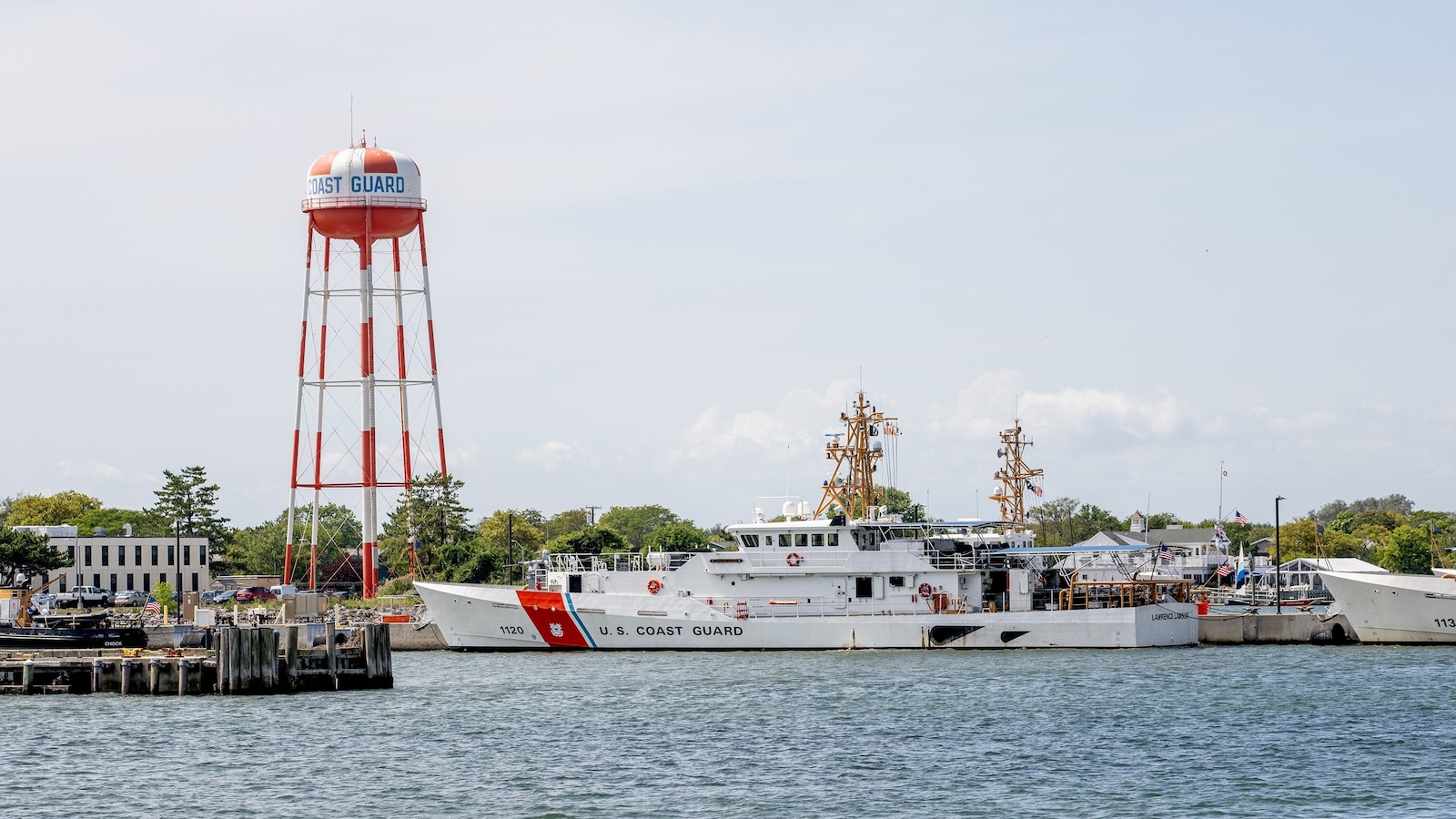
The general feeling is a mix of outrage, sarcasm, and political polarization, with many accusing the Coast Guard and Governor Noem of enabling extremist ideologies or hypocrisy, while others mock the situation as a farcical political spectacle. Comments frequently link the swastika incident to broader debates over hate symbols, ICE policies, and the Coast Guard’s role in immigration enforcement, with some suggesting the investigation is a cover for promoting extremist recruits or rewarding perpetrators. The tone oscillates between dark humor and frustration, with users mocking the absurdity of the situation, questioning the Coast Guard’s policies, and criticizing political figures for their actions. Personal anecdotes and military experiences are interwoven with accusations of institutional racism, institutional failure, and partisan blame, reflecting a deeply divided and cynical view of leadership and institutional integrity.
