Real-Time News Sentiment
Analysis of trending Reddit news — tracking public mood,
controversy, and key topics
1358 Stories Analyzed
80 Positive Sentiment
1167 Negative Sentiment
r/news
Public Sentiment
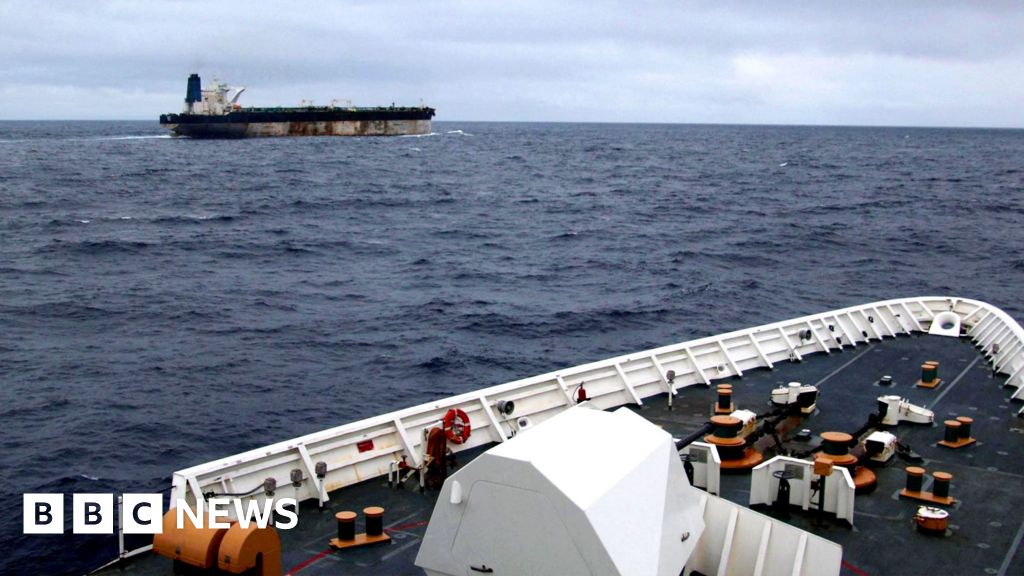
People express frustration that the UK's action against Russian shadow fleet tankers, like the Marinera (Bella 1), which violated international law by flying false flags and operating statelessly, is finally being addressed after years of Russian sabotage. They see this as a necessary response to Russia's asymmetric warfare tactics, including cable cutting in the Baltic Sea, and believe the UK has legal grounds under UNCLOS to board such vessels. However, many feel this move is politically motivated, with skepticism about whether the UK government is truly acting independently or bending over to US interests. Dominant sentiment reflects deep distrust that UK legal actions are tools for US influence, citing past cases like Iraq and Gaza. Commentators argue that international law is being selectively applied to serve geopolitical agendas, and they warn that Europe must become more responsive to Russia's actions without falling into the trap of naive legalism or complicity with US policies. The general feeling is that while the UK's action is justified against Russian violations, its execution risks reinforcing a pattern of UK governments legitimizing actions for external powers rather than upholding independent international law.
Public Sentiment
The overwhelming sentiment among readers is confusion and sharp criticism of U.S. leadership, particularly Trump and Vance, with many viewing Greenland's preference for Denmark as a direct rejection of American policies they see as dangerous, exploitative, or hypocritical. Comments highlight irony in the title, mocking the U.S.'s self-perception as a global peacekeeper while Greenlanders face issues like resource exploitation and military presence, with readers sarcastically noting the U.S. "vanity project" and Trump's "personal psychology" driving the move. Most opinions reflect a deep-seated distrust of U.S. governance, especially among Americans who cite systemic failures like healthcare, education, and social programs compared to Nordic nations. Readers emphasize Greenland's historical ties to Denmark (90% indigenous Inuit population) and NATO security, arguing the U.S. prioritizes short-term political gains over Greenland's well-being, while many explicitly state they’d prefer Denmark for its perceived stability, social welfare, and ethical stance—calling the U.S. choice "fucking funny" or "evil" in the context of current leadership.
Public Sentiment
The overwhelming sentiment from these comments is deep frustration and anger toward U.S. policies, particularly Trump's administration, immigration practices, and the perceived decline in democratic values. Readers consistently criticize the U.S. for its authoritarian tendencies, violent rhetoric, and failure to address systemic issues like economic inequality and immigration, with many expressing disbelief that Americans remain indifferent to their country's problems despite visible suffering. There’s a strong sense that the U.S. is prioritizing aggression over stability, with comments highlighting how policies disproportionately harm marginalized groups and undermine global trust. This frustration is compounded by a pervasive feeling of helplessness and exhaustion, as readers acknowledge their own struggles while condemning U.S. inaction. Many emphasize that meaningful change requires direct engagement with government systems—not complaining or empty rhetoric—yet express hope that collective action can prevent further collapse. The dominant tone reflects a desperate plea for responsibility: the U.S. must confront its own failures without defensiveness, as the current trajectory risks irreversible harm to both domestic and global stability.
Public Sentiment
The dominant sentiment across the comments reflects a mix of cautious skepticism and dark humor regarding Trump's potential actions, with most people dismissing the "Greenland attack" narrative as a deliberate distraction tactic while acknowledging the real risk of escalation against Iran. Many express concern that Trump’s threats could lead to military intervention in Iran, but emphasize the lack of credible evidence and the need for vigilance without treating unverified claims as gospel. The comments highlight a widespread awareness that Trump’s motives are likely self-serving (e.g., oil access, regime change), yet there’s significant doubt about whether he’ll follow through on violent actions, especially given his generals’ opposition and the geopolitical complexities of targeting a NATO ally versus a regime like Iran. People are deeply divided on the humanitarian implications, with Iranians expressing hope for US intervention while others stress the urgency of preventing further bloodshed. The discourse is permeated by pragmatic pessimism about Trump’s unpredictability—acknowledging his tendency to pursue "wants" regardless of consequences—coupled with a shared sense that the situation could escalate rapidly without clear benefits for the US or its allies. This tension between optimism about potential outcomes and fear of unintended consequences defines the collective mood, where humor about Pentagon pizza orders and Greenland serves as a coping mechanism for the gravity of the geopolitical stakes.
r/news
Public Sentiment
People express deep frustration and disbelief over Trump's unfulfilled promises, particularly regarding refund checks and his apparent disregard for consequences. They view his actions as increasingly senile, dishonest, and self-serving, with many mocking his tendency to create "imaginary" benefits for his base while ignoring real-world impacts like inflation and food costs. The recurring theme is that Trump’s broken promises—such as the "Doge dividend" or IVF payments—have become a symbol of his overall disregard for accountability, with critics arguing he treats voters like "imaginary things" to manipulate support. This sentiment fuels widespread anxiety about election outcomes, as people believe Trump’s current policies (like ending TPS for Somalis) are distractions from critical issues like inflation and voter suppression. Many fear his tactics—such as threatening to delay elections or deploy ICE—will deepen political polarization and undermine democracy, with the overwhelming mood being that Trump’s actions are both a sign of his deteriorating leadership and a dangerous threat to the election process itself.

r/news
Public Sentiment
People's opinions consistently express deep alarm and anger that the EPA is prioritizing corporate economic impacts over human health, viewing the change as a dangerous shift where "health is not considered at all" and "human life" is being removed from calculations. They see this as a fundamental betrayal of the EPA's mission, arguing it places "corporate profits" above public welfare and reflects a broader trend of regulatory capture where agencies serve business interests instead of protecting citizens. The sentiment is overwhelmingly negative, characterized by frustration that the U.S. government is "corrupted," "moral decay" is accelerating, and environmental protection is being sacrificed for short-term economic gains. Many fear this policy will accelerate pollution, weaken the country's environmental standing, and align the U.S. with "naked corporate greed" while other nations like China advance cleaner alternatives—describing the outcome as the nation becoming a "polluted dumpster" rather than safeguarding public health.

r/news
Public Sentiment
The dominant sentiment across the discussion is strong opposition to capital punishment in most contexts, with many emphasizing it should only apply in extreme cases involving active lawbreakers or those orchestrating widespread harm, such as despotism or large-scale insurgency. People consistently highlight the risks of mistaken identity and irreversible error, arguing that the death penalty lacks absolute certainty in proving guilt beyond doubt. South Korea’s historical stance—maintaining an informal moratorium on executions since 1998 with no executions since 1997—resonates as a model for avoiding political abuse, particularly in light of concerns about authoritarian tendencies in other systems. This context reinforces the view that capital punishment is most justified only when there is near-total certainty of guilt and the threat of continued harm to the nation, not for political expediency.
Public Sentiment
The opinions reveal significant confusion about responsibility and sanctions enforcement, with most people concluding Russia—not Ukraine—is likely behind the drone strikes on Greek-flagged tankers in the Black Sea. While some argue the tankers were legally loaded with Chevron oil (not Russian crude), others highlight how sanctions evasion through "ghost fleets" and oil commingling complicates targeting, making it unlikely Ukraine would deliberately attack EU ships without major geopolitical risks. The incident underscores the difficulty of enforcing oil sanctions and the strategic challenges of shifting energy dependencies. Environmental concerns dominate the discourse, even as tankers were reportedly empty and no spill occurred. Critics warn that accepting such attacks as "acceptable" during conflict sets a dangerous precedent for ecological damage, emphasizing that ecosystems don’t care about the cause of pollution. Meanwhile, Greece’s swift support for similar drone strikes—driven by resentment over Russian oil—highlights the tension between national interests and broader sanctions compliance, with many stressing that switching energy systems requires immense political and economic sacrifice.
Public Sentiment
The dominant sentiment across the discussion is strong support for imposing the death penalty on Yoon Suk-yeol, viewing his actions—particularly attempting to provoke North Korea into a full-scale attack to maintain power—as treasonous and reckless that warrants the harshest punishment. Many argue this is the only meaningful response to a leader who deliberately set the stage for mass violence, mass arrests, and potential bloodshed, with historical context in South Korea’s authoritarian past reinforcing the belief that such extreme accountability is necessary to prevent future coups and protect democratic institutions. While a minority expresses concern about the death penalty being overly severe or too risky for future political instability, the overwhelming consensus leans toward the death sentence as the only justifiable outcome for someone who intentionally undermined national security and democracy. This perspective is bolstered by the belief that South Korea’s judicial system has been exposed as unstable, making the death penalty a necessary precedent to ensure leaders who threaten the nation face irreversible consequences.
Public Sentiment
People's opinions overwhelmingly frame the Russian official's statement as a deliberate, low-effort tactic by Moscow to pressure Trump into dismantling NATO—viewing it as coordinated propaganda to exploit Trump's perceived incompetence and lack of awareness. They describe it as a "coordinated comms" ploy where Russia actively manipulates Trump's vulnerabilities, claiming he's "so dumb" he'd fall for the bait, while simultaneously framing the U.S. as a "vassal state" to Russia. The sentiment is deeply cynical, with many insisting Trump's actions are pre-approved by Moscow and that the entire narrative serves to destabilize Western alliances without genuine concern for consequences. The dominant feeling is one of alarm and disbelief at how transparently the situation is being weaponized—people see Trump as emotionally and intellectually fragile, easily manipulated by Russia to "destroy NATO" for its own strategic gain. They emphasize that this isn't a genuine threat but a calculated test of U.S. resolve, with the U.S. (especially Trump) being "the target" in a bid to push the West into collapse. The tone is resigned, mocking the absurdity of the situation while underscoring that the real danger lies not in Greenland itself but in Trump's willingness to follow Russia's lead without realizing it.
Public Sentiment
People express widespread fear and despair over the escalating violence in Iran, with death tolls estimated between 2,000 and 12,000, and a sense that the regime is deliberately prolonging suffering to delay its collapse. Many feel international powers, particularly the U.S., are failing to intervene meaningfully despite promises, leaving Iranians vulnerable to further bloodshed under a system they view as fundamentally violent and oppressive. The sentiment is dominated by urgent anxiety about the transition from protest to civil war, frustration with the regime’s use of state violence to suppress dissent, and deep pessimism about global solutions—especially given the regime’s apparent willingness to sacrifice more lives to maintain control while facing internal and external collapse.
Public Sentiment
The thread overwhelmingly expresses skepticism about the Al Jazeera article's claims, with most users dismissing the idea that the US Navy would disguise aircraft as civilian planes for drone strikes. Commenters highlight that the US has long operated intelligence and special forces aircraft in civilian paint schemes without issue, and that the alleged "disguise" makes little practical sense given the low speed and high altitude of the operations—boats couldn't realistically identify or evade such aircraft. Many argue the story lacks credible evidence, noting the absence of photos or verified sources beyond Reddit, and emphasize that the US has been conducting similar strikes openly for months without needing to hide its activities. The consensus leans toward the report being sensationalized or fabricated to fuel distrust, with users frustrated by the lack of transparency and the tendency to treat unverified claims as legitimate without proper scrutiny.
